US blockade dwarfed by Iranian naval power
The IRGC seized two vessels on Wednesday for 'disrupting order and safety in the Strait of Hormuz'
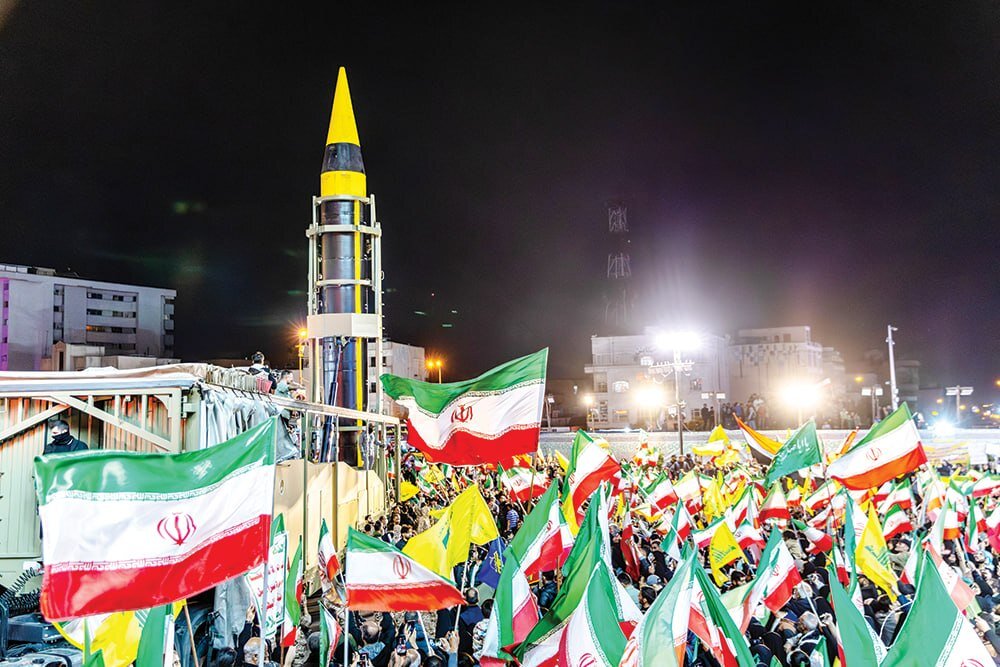
TEHRAN - President Donald Trump’s unilateral extension of the two-week ceasefire with Iran highlights the country’s battlefield strength and lays bare the failure of US military strategy.
On Tuesday, Trump announced the ceasefire extension on Truth Social. The US president said he made the decision at the request of Pakistan, which has been mediating talks between Tehran and Washington.
“We have been asked to hold our Attack on the Country of Iran until such time as their leaders and representatives can come up with a unified proposal,” he added.
Trump’s move came after Iranian officials said they would not engage in fresh talks with the US under coercion and threats. The truce had come into effect on April 8, following the joint US-Israeli war on Iran that began on February 28.
US ‘excessive’ demands
Iran and the US held talks in Islamabad on April 11 and 12 aimed at ending the conflict. However, the talks failed over what Iran called Washington’s excessive demands.
Pakistan intensified efforts to hold a second round of negotiations in Islamabad, but Iran refused to attend, citing US violations of the two-week truce, which includes a US naval blockade on Iranian ports. The US imposed the naval blockade after the failure of the first round of talks in Islamabad.
US war aims
The late February war aimed to destroy Iran’s military capabilities and reshape its political leadership in Washington’s favor. Despite the assassination of Iran’s Leader, Ayatollah Seyyed Ali Khamenei, and senior military and political figures, that goal remains elusive.
During 39 days of war, Iran responded to the joint campaign by targeting Israel and US bases in the Persian Gulf region, carrying out 100 waves of missile and drone strikes.
Trump’s overconfidence had been shaped by the controversial US operation in Venezuela, where President Nicolás Maduro was kidnapped in a dramatic show of force. Emboldened by this, Trump seemed to believe a similar “regime decapitation” strategy could work in Iran—despite the country’s deeper political structure and strong resistance to foreign intervention.
Encouraged by allies such as Israeli Prime Minister Benjamin Netanyahu, this miscalculation fed Washington’s aggressive posture toward Tehran. However, as risks and complexities became clearer, Trump appears to be backing away from the idea that removing Iran’s leadership would trigger regime collapse, instead searching for a face-saving exit from an increasingly difficult confrontation. The US naval blockade is now seen as a strategy to exert economic pressure on Iran. However, full control over the Strait of Hormuz has created a challenge to Trump’s plan.
Iran has asserted control over the Strait of Hormuz since the outset of the war in late February. It has banned vessels affiliated with adversaries from passing through it.
Iran had signaled that it would allow commercial ships to transit the strategic waterway through coordination with Iranian armed forces during the two-week ceasefire. However, Iran closed the strait over the weekend due to the continued US naval blockade of Iranian ports.
IRGC seizes ‘enemy’ ships
On Wednesday, the IRGC Navy confirmed it intercepted and transferred two ships linked to “the enemies.” It said the vessels, identified as the MSC Francesca and Epaminondas, endangered maritime safety by operating without the necessary permits and tampering with navigation systems.
The seizures indicate that the Strait of Hormuz remains under Iran’s control and authority, despite Trump’s claims that he has destroyed Iran’s military capabilities, including its naval forces.
’Finger on the trigger’
Amid Trump’s military threats over Iran’s control of the strait, the Islamic Revolution Guard Corps (IRGC) warned that any US or Israeli act of aggression against Iran would be met with “crushing blows.”
In a statement on Wednesday, the IRGC added that Iranian armed forces are “ready for decisive, certain, and immediate confrontation with any threat or repetition of enemy aggression.”
The Khatam al-Anbiya Central Headquarters, which coordinates operations between Iran’s armed forces, also warned that Iran’s military has its “finger on the trigger” in the face of possible aggression.
The commander of the IRGC Aerospace Force also warned Persian Gulf states against assisting potential American attacks.
“And let the southern neighbors know: If their territory and resources are used by the United States to attack the Iranian nation, they must bid farewell to oil production in West Asia,” Brigadier General Seyyed Majid Mousavi said on Tuesday.
Such warnings and the recent seizure of “enemy” vessels indicate that Iran will not hesitate to respond decisively if the US seeks to use the naval blockade as leverage.
Trump backs off
Trump’s decision to prolong the truce marked the second time he has backed off a threat to escalate the war. Before the April 8 ceasefire, he had warned that Iran’s “whole civilization will die tonight” if Tehran did not comply with his demands.
Trump’s critics have mocked his strategy toward Iran, labeling him a “sucker” and coining the term “TACO” (Trump Always Chickens Out).
The Wall Street Journal strongly criticized Trump’s war policy, stating in an article titled “The Iranians Take Trump for a Sucker” that Iran continues to maintain leverage despite US claims.
The Independent highlighted mockery from Trump’s critics, referencing the “TACO” label.
CNN also published an analysis titled “Why Trump’s latest blink on Iran could be more than a TACO Tuesday.” It argued that Trump’s strategy of using threats of overwhelming US military force to coerce Iran into surrendering at talks has repeatedly failed, weakening the credibility of US threats.
Ultimately, the unfolding situation underscores Iran’s strategic resilience and its ability to withstand sustained US pressure without conceding its core national interests.
Trump’s repeated reversals and reliance on maximalist threats have instead exposed the limits of US leverage and damaged the credibility of American deterrence. Far from achieving its objectives, the US policy has reinforced Iran’s position as a key regional power capable of resisting external pressure and shaping events on its own terms.
Leave a Comment